•   
  •   
  •   
 

You Are Viewing Map

10 Questions: Cycling On The Andean Puna

Posted April 4th, 2013

The Puna, or Altiplano, is a high altitude region of the Central Andes spanning southern Peru, western Bolivia, north-east Chile and north-west Argentina.

It is one of the most extensive areas of high plateau in the world, and Harriet & Neil Pike explored the Puna extensively by bicycle in 2010 and 2011. They recently took the time to answer 10 Questions about their bike tour through the area.

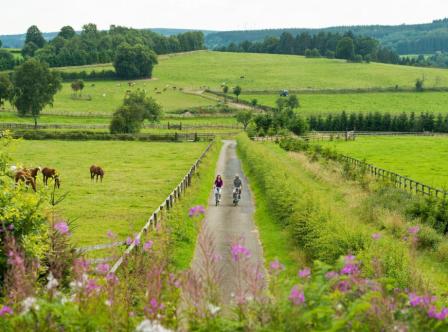
Chasing llamas to Sajama, Bolivia.
Chasing llamas to Sajama, Bolivia. Photo by www.andesbybike.com

1. Which route did you take in the region?

We spent nine months in 2010 and 2011 on the Puna, first cycling northwards through Argentina, Chile and western Bolivia before taking a circuitous route through southern Peru. Still eager to continue exploring the area, we then did an about turn and cycled south through Chile and Argentina.

2. Why spend so long cycling there?

We were fascinated by the desolate landscape with its sprinkling of salars and colourful lakes, and volcanoes dotting the skyline. We loved the wide open spaces, the big skies, and seeing more camelids than cars. Going hours without encountering another human being made any meeting with a friendly local person, in an area you wouldn’t think it possible to eke out an existence, all the more special. Above all we enjoyed the sense of freedom and the challenge of having to be self-reliant, carrying all we needed – our food, clothes and home – on our bikes.

Cycling on the Salar de Coipasa, Bolivia.
Cycling on the Salar de Coipasa, Bolivia. Photo by www.andesbybike.com

3. How useful were maps for route planning?

The availability and accuracy of road maps very much depends on the country. Good maps are available in Argentina. Likewise, you can find Chilean maps that are of reasonable quality. There are maps of Peru and Bolivia that show main roads accurately but despite buying a wide selection we didn’t find any that were reliable on minor unpaved roads. Often the smaller roads we took didn’t exist on maps and there were few road signs to follow.

4. How did you navigate in remote areas without maps or road signs?

We spent a lot of time in internet cafes looking for information on cyclists’ blogs and poring over satellite images on Google Earth, searching for small unpaved roads to cycle. We then noted down GPS co-ordinates of landmarks such as rivers, junctions or settlements and used these to help us navigate. Sometimes this was overkill and we could get by on the ground by asking local people, but on many occasions we were grateful to our GPS to know which way to turn at forks in the road.

Local drivers can also be an excellent source of information, though be wary of asking directions from people who don’t travel the roads very frequently – they might provide you with an answer, but it could well be guesswork.

5. What can you expect to encounter weather-wise?

All year round, the region sees warm days and cold nights. We were grateful for our four season sleeping bags as the temperature regularly falls below zero at night, and -20°C isn’t uncommon in June or July. The best time for cycling in the northern Puna is the dry season (April–October) with its blue skies and days without a cloud.

In southern areas of the Puna the summertime from December–March is better as this avoids the often savage winter weather. At any time of the year don’t be surprised if you encounter fierce winds. While it may not have Patagonia’s reputation for strong winds, much of the Puna can give even the windiest parts of Patagonia a run for their money.

Camping on the Puna in southern Peru.
Camping on the Puna in southern Peru. Photo by www.andesbybike.com

6. Is the food anything to look forward to?

Um, in a word, no. Many parts of the Puna, particularly in Chile and Argentina, are very sparsely populated so you’ll usually have to fend for yourself. Carry a few days’ provisions and cook on a camp stove. Small villages in Bolivia and Peru often have a basic restaurant but the difficulty in growing local produce and of importing fresh supplies from afar means that you’ll have to get used to surviving for days at a time on the staples – rice, eggs, potatoes, chuño (freeze dried potatoes) and hearty broths.

In Sajama National Park, Bolivia.
In Sajama National Park, Bolivia. Photo by www.andesbybike.com

7. What are road conditions like?

There aren’t a huge number of paved roads and those that have been tarmacked are usually busy with truck and bus traffic. Heading onto unpaved roads means taking pot-luck with the surface. The Bolivian altiplano has a reputation for having bad roads, but it by no means has a monopoly on them. In all countries of the Puna you can happen upon a good consolidated unpaved surface or find yourself rattling over corrugations or floundering in sand. As a rule it’s best not to expect to travel too quickly!

8. Most of the Puna is above 3,500m. Did you have difficulties with the altitude?

Apart from going very slowly and panting a lot up to the first few passes, we were lucky and didn’t have too much trouble. If you haven’t been at altitude much before it’s a good idea to read up about Acute Mountain Sickness at sites like www.altitude.org beforehand, then take it easy and gain height slowly to begin with.

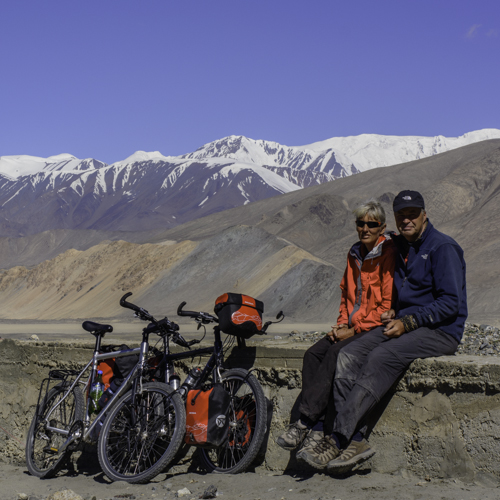
Near Laguna Negro Francisco, northern Chile.
Near Laguna Negro Francisco, northern Chile. Photo by www.andesbybike.com

9. As well as cycling, you also hiked on this journey. What’s the Puna like for hiking?

Hiking up mountains was almost as important a part of our trip as the cycling, and we spent many happy days cycling to mountains on the Puna, dumping the bikes and then heading off on foot with backpacks. Most of the highest mountains in the Andes lie on the Puna, and with few exceptions they are non-technical ascents. If, like us, you love the wild, barren landscapes and don’t mind going a while without seeing a tree, there are plenty of opportunities for exploring the Puna on foot.

10. Any advice do you have for other cyclists heading to the area?

Choose your tent carefully, and then look after it well! It needs to be good in strong winds so geodesic tents are better than tunnel tents and will give you a quieter night’s sleep. Try not to leave it up for too long in the sun. The fabric will soon degrade due to the high intensity UV. Be warned that in the dry Puna regions tents shrink, so unless you can vary the length of the tent sleeves it can be difficult or impossible to get poles in.

Also, treat all zips with care as they become fragile and regularly break in the dry atmosphere. On leaving the Puna we were left with few working zips despite having become very adept at fixing them with candle wax and pliers!

More importantly, research your route before heading out to the remote areas – on many roads you can go hours or days without coming across water, supplies or a village. There is plenty of information on routes we took on our Andes By Bike website.

Thanks to Harriet & Neil Pike for answering the questions and providing the photos. Check out their Andes By Bike website for more information. If you’d like to answer 10 questions about a favourite cycling destination, read the guidelines and then get in touch.

Our Easter Tour: On Folding Bikes In The Freezing Cold

Posted April 2nd, 2013

Over Easter we went on a short bike tour through the east of the Netherlands with several friends. There were six of us in total, riding four folding bikes and two ‘big wheel’ touring bikes.

Easter cycling Tour

It was unseasonably cold (barely above freezing during the day) but despite the chilly weather we had a super time riding from Arnhem to Roermond. Below you’ll find the short film (in an English and a Dutch version) to tell the story.

Thanks to our friends Stijn, Shane and Marieke & Anthony for the great company, and to the lovely owners of the Landgoed Geijsteren and Raayerhof campgrounds, where we stayed in trekkers huts so that we wouldn’t have to suffer through sub-zero temperatures at night.

Here’s the film in English:

And in Dutch:

One Month Bike Tour Of Cuba (Part V)

Posted March 27th, 2013

Our Bicycling Cuba book assures us that the ride from Sancti Spiritus to Trinidad is one of the most beautiful in Cuba, and it’s not wrong.

Before long, we’ve cleared the city limits of Sancti Spiritus and we’re cycling on blissfully quiet and wide-open roads. Only a few Cuban cyclists, and the occasional car, keep us company.

Local cyclist in Cuba

The mountains in the distance grow closer, and we’re almost tempted to follow one of them into the foothills. In another time and place (without a baby, and on full-sized touring bikes) we might have done just that. This time, however, we settle for a picture in front of the mountains.

Group shot!

After several shots, this is the closest we get to all of us looking at the camera at the same time. Luke has actually been distracted by a passing motorbike and turns his head at the critical moment. That’s okay. Group pictures are nice to have but this road is even better! Look at those blue skies. Gorgeous.

Cycling to Trinidad from Sancti Spiritus

About halfway down the road, we stop for something to eat in a roadside village. We order the vegetarian pizza, and when we spot this box near the restaurant we’re happy we avoided the meat!

"Meat For Tourists". Eeeewwwww.

Tinned Meat For Tourists? What in the world is that about? We’re not sure that we really want to know. What we are sure about is that we don’t want to try any ‘Fiambre de Cerdo Turista’ – imported from Poland to Cuba.

We finish our pizza instead, and top up with some cookies and a generous drink of water. Luke is now interested in the water bottle, so we spend quite some time teaching him how to drink from it.

Luke learns to drink from a water bottle

Around 4pm we roll into Trinidad, with its colourful houses. For the first time on this trip, the guesthouse of our choice is full, so Andrew has to wait by the curbside with Luke for a few minutes, while Friedel goes in search of accommodation. It’s not a problem. Within 15 minutes we’ve found a nice room, just around the corner.

Waiting....

We get cleaned up and go out for another pizza. It’s rapidly becoming our staple food. While we’re waiting, Luke practices his waving skills with the daughter of the pizza shop owner.

Waiting....

We’re comfortable here, and still taking things easy so we plan to spend a few days in Trinidad and the surrounding area before turning north towards Havana to complete our trip.

*This is the fifth in a series of journal entries about our one-month, 750km tour of Cuba. See the first entry, the secondthe third and the fourth. More coming soon!

One Month Bike Tour Of Cuba (Part IV)

Posted March 25th, 2013

After two weeks of very slow cycling (thanks to our wobbly start and the antibiotics that followed), we’re about halfway through our bike tour of Cuba and the towns of Santa Clara and Remedios are next on our agenda.

First up is Santa Clara, a city made famous by the fact that the last battle of the Cuban Revolution took place here in 1958. This momentous occasion is marked by a huge monument to Che Guevara.

Che monument in Santa Clara

Santa Clara is about 80km from Cienfuegos so we pack up early. We’re not sure if we can make the distance. There might be a headwind and we’re not always very quick with a baby on board. As we load up the bikes, the friendly B&B owner comes out to entertain Luke. Cubans simply love kids.

Leaving Cienfuegos

The road is fairly flat and – to be frank – a bit boring. We try (and fail) to figure out the many revolutionary slogans, and we gaze at the endless fields of sugar care alongside the road.

Cycling towards Santa Clara

There are no real tourist attractions but we make our own fun at roadside drinks stalls. Keys always put a smile on Luke’s face, and almost everyone is willing to lend him a set when we stop.

Andrew & Luke at a roadside cafe

To our amazement, we make Santa Clara by the end of the afternoon without feeling rushed. We strike a ridiculous pose in front of the famous monument (actually, it’s just Friedel looking ridiculous in this photo – why didn’t anyone tell her??) and head into town.

In front of the Che Monument, Santa Clara

Santa Clara, as we soon find out, is a bike photographer’s dream! Here’s just one of the cool bicycles we spotted. This one is a moveable market stall.

Vegetable seller

And the local people are displaying some bike skills that make us quite nostalgic for home in the Netherlands!

Cyclists in Santa Clara, Cuba

Another day, and a few more kilometers down the road, Friedel gets the chance to try a Cuban bike. The back-pedal brakes barely work and the chain is rusty but it puts a smile on her face!

Friedel on Jose's bike (in Remedios)

Luke, meanwhile, is more interested in the retro 1950s playgrounds and their squeaking swings.

Luke at a Cuban playground

Next up for us will be the city of Sancti Spiritus, and a ride that’s reputed to be the most beautiful in Cuba!

*This is the fourth in a series of journal entries about our one-month, 750km tour of Cuba. See the first entry, the second and the third. More coming soon!

A One Month Bike Tour Of Cuba (Part III)

Posted March 9th, 2013

After an all-day bus journey, we turn up in the central Cuban city of Cienfuegos around sunset.

We’re happy to be here at all because the bus was overbooked and about 10 people were left behind in Viñales. This is a side-effect of travelling in the high season in Cuba: very busy public transport.

Thankfully, it’s no problem to find a room for the night so we quickly park our luggage and go exploring. Within a few minutes we end up at the pier, where a group of men are fishing for their dinner.

Fishing off the pier in Cienfugos

We’re not here for the fishing opportunities, however. We’re here to go cycling in the surrounding area. There are numerous day trips outlined in the Bicycling Cuba book and the next morning we tackle one of them: out to a nearby penninsula and back by ferry.

The road out of the town has plenty of traffic, but it’s all relatively slow-moving. We don’t mind sharing our road-space with this kind of traffic!

Public Transport In Cuba

Before long, the sun is rising and we’re drinking heaps of water to cope with the heat. We’re so glad we brought our water filter. At the rate we go through water (several litres a day), it would cost a small fortune to buy it all, not to mention the environmental cost of continuously throwing out plastic bottles.

Hot and thirsty cycling near Cienfuegos

There are also hills. Okay, it’s not quite the Himalayas but with temperatures over 30°C it doesn’t take much to wear us out.

Hills in Cuba

Eventually we get to the beach, where we take a short break before hopping the ferry back into Cienfuegos. The locals pay 1 peso for the ride and bikes go free. We each pay $1 American dollar and another $1 U.S. for our bikes. There’s no way around the tourist charge: they know we don’t have any option, aside from backtracking 30km.

Bikes on the ferry

And then, just as we’ve paid up (all the while muttering under our breath about the inflated cost), this boat rolls up.

The real ferry boat

We ask the captain where it’s going. He mumbles something about Cienfuegos. We become confused. There’s more questioning (from us) and mumbling (from the captain) and then we realise…. we’ve just paid $2 U.S. each for a ride on the wrong boat. Damn!

Off one boat, on to the other, another $4 U.S. paid, 20 minutes below deck with 100 other sweating people and …. finally … Cienfuegos. That was an expensive and exhausting ferry ride!

On the ferry back to Cienfuegos

Back in Cienfuegos, we’re on the final days of Luke’s course of antibiotics so we do some general lounging. This includes a bit of bike-gazing …

Bikes In Cuba

… boat watching …. (this is a fishing boat, made out of styrofoam)

styrofoam boat

… and sunsets on the pier. Next stop, Santa Clara!

Cienfuegos Pier

*This is the third in a series of journal entries about our one-month, 750km tour of Cuba. Click here for the first entry and here for the second. More coming soon!